
We will achieve net zero by 2040
Climate change remains one of the greatest threats to our planet and we recognise the impact on businesses and supply chains, including our own. Addressing our climate risks and opportunities is embedded into our business as well as our Sustainability and Social Impact strategy – from new products and propositions to circular business models and emissions reduction investments.
We align our disclosures with the Taskforce on Climate-related Financial Disclosures (TCFD) recommendations and recommended disclosures. We comply with ten of the recommendations and continue to work on providing fuller disclosure on the resilience of our strategy for our wider supply chain. See pages 26-31 of our Annual Report.
Understanding the impacts of climate change on our business provides us with the opportunity to develop a strategic response to mitigate the risks, whilst building on the opportunities this presents for Currys. Exactly what scenario the world takes is completely unknown but the impacts will be felt globally and could happen anywhere at any time, indeed many impacts are already being felt. Our scenario analysis work provides an insight into how exposed Currys could be to climate change and helps us build effective mitigation plans, stress test our organisational resilience and improve the execution of our net zero strategy.
Climate action at a glance
You can read more about our governance structure, strategy, risk management, metrics and targets in our Annual Report.
Net Zero Emissions
Net zero is the future and we're committed to achieving net zero emissions by 2040 by reducing the impact of the energy and resources we use in our operations - but also in our wider value chain.
Our emissions reduction targets to reduce Scope 1, 2 and 3 greenhouse gas (GHG) emissions by 50% across the Group by FY2029/30, have also been approved by the Science Based Targets initiative, as consistent with levels required to meet the goals of the Paris Agreement. We also support the British Retail Consortium's Climate Action Roadmap, committing the UK retail industry to be net zero by at least 2040.
We commit to conducting all policy engagement and advocacy activities in alignment with global environmental treaties, including the Paris Agreement and the UN Sustainable Development Goals, and will not support policies that undermine these commitments.
Progress against our net zero target is positive, with a 37% reduction in Scope 1, 2 and 3 emissions achieved in 2025/26 against a 2019/20 baseline. View our Energy & Carbon data in the Sustainable Business chapter of our 2025/26 Annual Report on pages 20-34.
We engaged KPMG LLP to undertake independent limited assurance under ISAE (UK) ISAE 3410 for selected energy consumption, e-waste and GHG emissions. View their assurance statement for 2025/26.
Currys GHG Emissions
The table below provides an overview of Currys’ emissions, including the reduction of our total emissions against a 2019/20 baseline of 37%.
For further detail, please go to the Data tab in our Policies and Disclosure page
| GHG emissions ('000 tonnes of CO2e emitted) | 2025/26 | Change (%) | 2024/25 | 2019/20 |
| Scope 1 | 15† | 0.74% | 15 | 19 |
| Scope 2 (location-based) | 17† | -11% | 19 | 40 |
| Scope 2 (market-based) | 0.77† | -11% | 0.86 | 5 |
| Scope 3, category 1: Purchased goods and services(1) | 2,692 | 19% | 2,254 | 4,203 |
| Scope 3, category 3: Fuel- and energy-related activities | 10 | -17% | 13 | 13 |
| Scope 3, category 4: Upstream transportation and distribution | 67 | 5% | 64 | 165 |
| Scope 3, category 5: Waste generated in operations | 0.46 | -49% | 0.90 | 0.92 |
| Scope 3, category 6: Business travel | 4 | -28% | 6 | 3 |
| Scope 3, category 7: Employee commuting | 44 | 15% | 39 | 25 |
| Scope 3, category 9: Downstream transportation and distribution | 17 | 2% | 17 | 36 |
| Scope 3, category 11: Use of sold products(1) | 6,314 | -1% | 6,400 | 10,124 |
| Scope 3, category 12: End-of-life treatment of sold products | 2 | -14% | 3 | 9 |
| Total Scope 3 | 9,152 | 4% | 8,795 | 14,580 |
| Total: scope 1, scope 2 market-based, scope 3 (all categories)(1)(2) | 9,168 | 4% | 8,811 | 14,605 |
| GHG emissions performance versus targets ('000 tonnes of CO2e emitted) | 2025/26 | Change against baseline (%) | 2024/25 | 2019/20 |
| Scope 1 and Scope 2 market-based emissions | 16 | -35% | 16 | 25 |
| Purchased goods and services and use of sold products emissions (categories 1 and 11)(1) | 9,006 | -37% | 8,654 | 14,327 |
(†) We engaged KPMG LLP to undertake independent limited assurance under ISAE (UK) 3000 and ISAE 3410 for selected energy consumption, e-waste and Scope 1 and 2 GHG emissions which have been highlighted with a †. For more details of the scope of their work, please refer to their assurance report.
Footnotes:
(1) We have restated the following Scope 3 data due to methodology changes within category 1 (purchased goods and services) and category 11 (use of sold products). These updates have resulted in a material change, and as per our Restatement Policy, this required the following restatements: category 1 2024/25 increased from 1,793 to 2,254 ‘000 tCO2 e, category 11 2024/25 decreased from 8,520 to 6,314 ‘000 tCO2 e and 2019/20 decreased from 12,570 to 10,124 ‘000 tCO2 e and total Scope 1, Scope 2 market based and Scope 3 emissions 2024/25 decreased from 10,470 to 8,811 ‘000 tCO2 e and 2019/20 decreased from 17,050 to 14,605 ‘000 tCO2 e. More information on this restatement process and a full reconciliation table can be found in our Basis of Reporting document.
(2) Further information on our Scope 1, 2 and 3 data methodology, including how we’ve defined our boundary, the source of data, our processes for missing data and key assumptions, is available in our Basis of Reporting document.
Scope 3 emissions
We remain committed to reducing absolute Scope 3 GHG emissions, which account for more than 99% of our total emissions. The most significant impacts are within purchased goods and services, and the use of sold products, where we target a 50% reduction by 2029/30 from a 2019/20 base year. We aim to reduce these emissions through activities involving our suppliers, manufacturers, colleagues and customers.
We have achieved a -37% reduction to date. However, due to increasing total sales resulting in increased emissions from the goods we purchase and upstream transportation, our total Scope 3 emissions have risen +4% year-on-year. We will continue to engage and support suppliers to reduce emissions.
Operational emissions
We continue to take action to reduce our energy use, delivering both cost efficiencies and emissions reductions. Total energy consumption across the Group has reduced -3% year-on-year.
Energy Consumption
Our approach is supported by ISO 50001:2018 certified energy management across our UK & Ireland estate and fleet, with recertification achieved for a further three years in August 2025. Our Newark repair centre and Elkjøp Nordic are ISO 14001 certified, and objectives are set annually at country level, providing a consistent framework to manage key impacts including energy use.
We continue to optimise our Building Management system control for Heating, Ventilation and Air conditioning (‘HVAC’) systems, increase the use of LEDs and optimise lighting levels, and improve our reporting and monitoring of energy consumption.
For more information, see page 29 of our 2025/26 Annual Report.
Renewable Energy Sources
We continue to have 100% of our properties in the UK, Ireland and Nordics powered with renewable electricity either through supplier contracts or renewable energy certificates (REGOs and GOs).
We have 17 sites with solar PV installed and continue to explore further opportunities. This includes 812 solar panels installed at our new Nordic Distribution Centre in Jönköping, Sweden, with a maximum production capacity of 449MWh, which have been operational since June 2025 and have produced 317MWh up to April 2026. Additionally, our Newark Building 3 that was secured in April 2026 has a 557KWp solar PV array.
Low carbon fleet
We are fully committed to transitioning 100% of our company cars and small van fleet and 50% of our medium to heavy fleet to electric or alternative fuel by 2030.
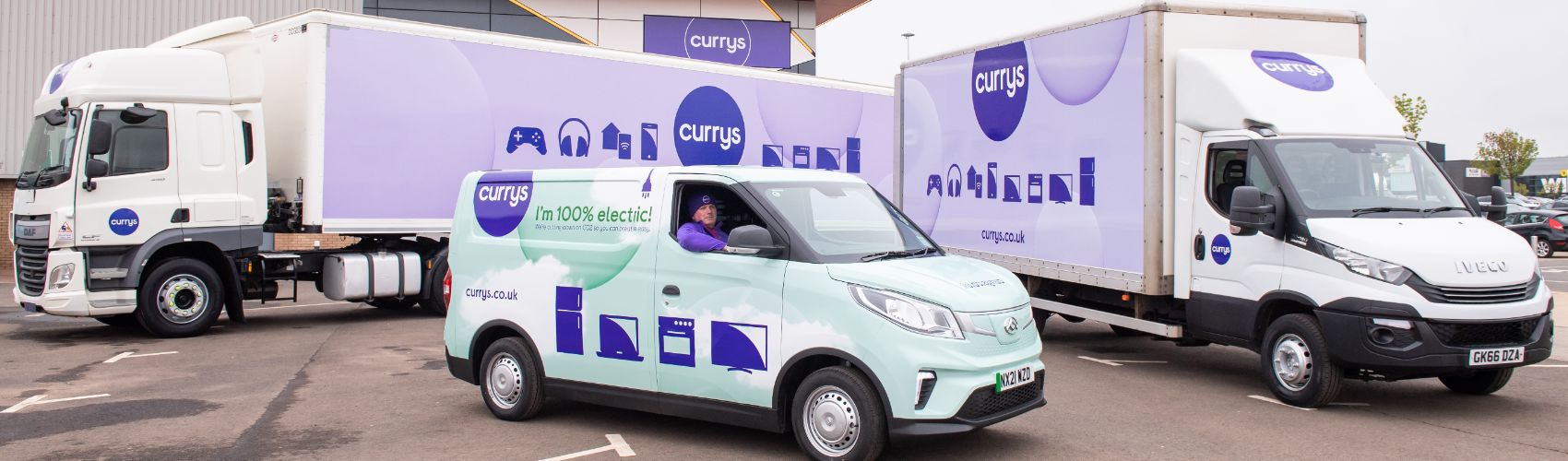
We now operate 52 EVs, 64 hybrid vehicles and 14 vehicles using alternative fuel. In addition, this year we introduced two new 100% electric tractor units operated by our partners at GXO. We plan to invest over £4m in the next three years to progress our transition away from diesel vehicles. In the UK&I, diesel‑only vehicles will be fully removed from the company car offering in 2026/27.
This year, our absolute transport emissions increased +3.5% driven by increased delivery fleet activity in response to strong sales. This occurred despite our progress transitioning our fleet to electric and alternative fuel vehicles. We continue to target reductions through driver training, telematics and in-cab driver alert systems, to improve vehicle efficiency.
In 2025/26 we introduced a total of 50 BEV and hybrid vans for our repair engineers across the UK. Challenges still exist in terms of reliability of alternatives for HGVs; during the year we concluded trials of a 7.2 tonne CNG vehicle and also a 7.2 tonne BEV where learnings will inform future low-emission vehicle trials. We continue to use solar panels on more than 250 vehicle roofs.
In the Nordics, we continued diversifying fuel sources across both linehaul and last-mile operations.
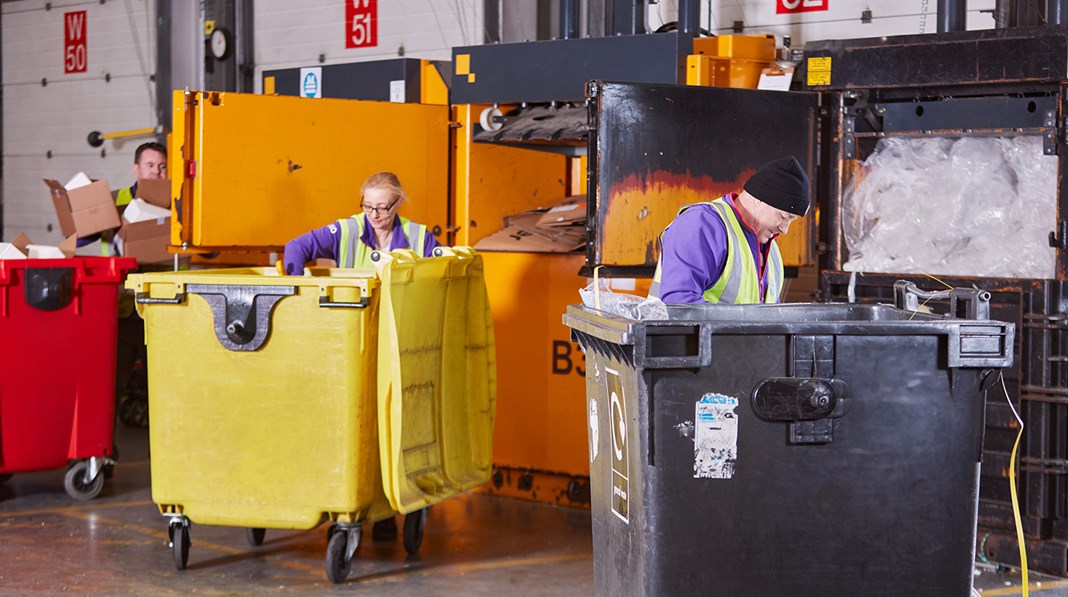
Our environmental policy covers the impact of our operations, products and services - including everything to do with energy and greenhouse gas emissions, materials and resources, our suppliers, our customers, legislative compliance and risk.